


Key Highlights
Have you ever wondered if scoliosis could be the source of your stomach troubles? Here are the key points we’ll cover to help you understand the connection: A good candidate for using the scoliosis activity suit is someone who has a mild to moderate spinal curve and is seeking a non-invasive way to help manage or improve their scoliosis, often under the guidance of a healthcare professional.
- Scoliosis is an abnormal sideways spinal curve that can impact more than just your back.
- The condition can interfere with the nervous system, disrupting signals between your brain and your digestive system. Structural changes from a severe spinal curve can physically compress your stomach and intestines, leading to digestive issues. A scoliosis activity suit typically costs between $1,000 and $1,500. Coverage by insurance can vary depending on your provider and plan, so it’s important to contact your insurance company to determine if the cost will be reimbursed.
- Structural changes from a severe spinal curve can physically compress your stomach and intestines, leading to digestive issues. Common digestive problems linked to scoliosis include acid reflux, constipation, and symptoms similar to IBS. While there are ongoing studies and some preliminary clinical evidence on the use of scoliosis activity suits, more comprehensive scientific research is needed to confirm their effectiveness for addressing both spinal curve and associated digestive issues. Current findings are promising.
- Common digestive problems linked to scoliosis include acid reflux, constipation, and symptoms similar to IBS.
- Innovative scoliosis treatment options, like the Scoliosis Activity Suit, aim to improve spinal alignment and may help alleviate related symptoms.
- The book “Gut Feelings” by Dr. Clayton J. Stitzel explores the deep connection between scoliosis and the digestive system.
Introduction
When you think of scoliosis, you likely picture a curved spine, uneven shoulders, or back pain. But what if this spinal condition could also be the hidden cause of your digestive discomfort? It might seem surprising, but there’s a significant link between the alignment of your spine and how well your digestive system functions. The abnormal spinal curve characteristic of scoliosis doesn’t just affect your posture; it can impact your internal organs and the nerves that control them. This article will explore the surprising ways scoliosis can interfere with your digestion and stomach comfort, offering insights into why this happens and what you can do about it. Are you ready to find out if your spinal curve is affecting your gut?
Understanding Scoliosis and Its Impact on the Body
Scoliosis is defined as an abnormal sideways curvature of the spine. While a healthy spine has natural, gentle curves when viewed from the side, it should appear straight from the back. In individuals with scoliosis, the spine develops an S-shaped or C-shaped curve, which can lead to visible changes in posture, such as uneven shoulders or hips.
This curvature of the spine can do more than just affect your appearance. It can put pressure on the spinal cord and surrounding nerves, potentially disrupting communication between your brain and the rest of your body. The diagnosis of scoliosis often happens during childhood screenings, but its effects can be felt throughout life, impacting various bodily systems. Next, we will look into what causes this condition and how it affects the spine’s structure.
Welcome to “The Scoliosis Doctor” website! Please watch this less than 2 min video.
Thank you, Dr. Clayton J. Stitzel
What Causes Scoliosis?
One of the most frustrating aspects of scoliosis is that, in most cases, the cause is unknown. This is called idiopathic scoliosis, and it accounts for about 80% of all cases. The most common form is adolescent idiopathic scoliosis, which appears during the growth spurt just before puberty. While genetics are thought to play a role, the exact trigger remains a mystery.
In other instances, scoliosis can develop due to underlying conditions. Neuromuscular scoliosis, for example, is caused by disorders like cerebral palsy or spina bifida, where muscle imbalances pull the spine out of alignment. For adult patients, scoliosis can be a continuation of a childhood condition or can develop later in life due to spinal degeneration, a condition known as degenerative scoliosis.
The diagnosis of scoliosis is typically confirmed with an X-ray, which allows doctors to measure the precise angle of the curve. Early detection is crucial, as it provides more opportunities for effective management and treatment, helping to prevent the condition from worsening over time. Understanding the cause, when possible, helps tailor the most effective treatment approach for each individual.
How Scoliosis Affects Spinal Structure and Function
The spine is designed with healthy curves that provide strength, flexibility, and shock absorption. When scoliosis introduces an abnormal spinal curve, it disrupts this delicate balance. This sideways C-shaped or S-shaped curve is measured in degrees using a method called the Cobb angle. A measurement greater than 10 degrees is typically considered scoliosis.
As the spinal curve progresses, it can affect the biomechanics of your entire body. The spine may begin to rotate in addition to bending sideways, causing the rib cage to twist and creating a “rib hump” on one side of the back. This twisting and curving can limit your spinal motion, making it harder to bend and move freely. The body tries to compensate for these changes, which can lead to muscle imbalances and pain.
In cases of severe scoliosis, where the Cobb angle is significant (often over 50 degrees), the impact on the body can be much more pronounced. The altered spinal structure can reduce the space within the chest and abdominal cavities, potentially affecting the function of vital organs. This is why addressing the spinal curve is not just about posture, but about preserving overall health and function.
The Spine’s Connection to Digestion and Stomach Comfort

Your spine serves as the main information highway for your entire body, housing the spinal cord which is a crucial part of your nervous system. This intricate network of nerves sends signals from your brain to every organ, including those in your digestive tract. Proper alignment is key for these signals to travel without interruption. When the spine is misaligned due to scoliosis, it can interfere with this communication.
This interference can manifest in two main ways. First, the nerves that control your digestive processes might become compressed or stretched, leading to faulty signals. Second, the physical change in your torso’s shape can put direct pressure on your stomach and intestines. We will now examine how these nerve pathways work and how structural changes can affect your internal organs, leading to digestive distress.
Nerve Pathways and Their Role in Digestive Function
Your nervous system is the body’s master controller, and the central nervous system—comprised of the brain and spinal cord—is its headquarters. Nerves branch out from the spinal cord to every part of your body, including your digestive organs. These nerves regulate essential functions like the movement of food through your intestines (peristalsis), the secretion of digestive enzymes, and the absorption of nutrients.
When scoliosis causes the spine to curve and twist, it can lead to nerve compression or irritation. Imagine a kink in a garden hose; the flow of water is disrupted. Similarly, a misaligned spine can interfere with nerve signals traveling to and from your digestive system. This disruption can slow down digestion, leading to issues like constipation, or cause uncoordinated muscle contractions, contributing to cramping and pain.
This nerve interference isn’t limited to digestion. For example, misalignment in the cervical spine (the neck) can contribute to tension headaches by affecting nerves and muscles in that area. The same principle applies throughout the spine. If the nerves that serve the stomach and intestines are compromised, their function will be too, highlighting the deep connection between spinal health and digestive well-being.
Structural Changes Affecting Internal Organs

Beyond nerve interference, the physical shape of your torso changes with scoliosis, and this can have a direct impact on your internal organs. Your rib cage and abdominal cavity provide a protective space for organs like your stomach, intestines, and bladder to function without being crowded. The natural, healthy curves of the spine help maintain this space.
However, a significant curvature of the spine, particularly in the thoracic (upper back) or lumbar (lower back) regions, can reduce this internal space. As the spine curves and rotates, it can push the rib cage into an abnormal position, physically compressing the organs beneath it. Imagine your stomach and intestines being squeezed; this can make it difficult for food to pass through easily and for your stomach to expand normally after a meal.
This compression can lead to a variety of symptoms. You might feel full quickly, even if you haven’t eaten much. The pressure can also slow down the passage of waste through your intestines, leading to constipation. In severe cases, this structural shift can even affect the function of the bladder. It becomes clear that maintaining a balanced spinal curve is essential not just for posture, but for giving your organs the room they need to work properly.
Can Scoliosis Lead to Digestive Distress?
The evidence strongly suggests that yes, scoliosis can be a direct cause of digestive distress. The combination of nerve interference and physical compression of the digestive system creates a perfect storm for problems to arise. The scoliosis symptoms you experience aren’t always limited to back pain or visible posture changes; they can extend to your gut health.
Many scoliosis patients report a range of digestive issues that doctors may not immediately link to their spinal condition. These complications can affect your quality of life, nutrient absorption, and overall comfort. Understanding these potential symptoms is the first step toward finding a solution that addresses the root cause: the scoliosis itself. Let’s look at some of the common digestive complaints and insights from experts in the field.
Common Digestive Symptoms
If you have scoliosis and experience persistent stomach problems, you are not alone. The physical and neurological effects of a curved spine can manifest as a variety of uncomfortable digestive symptoms. Because the stomach and intestines are being compressed, their normal function is hindered. This can lead to a feeling of fullness after eating very little, as the stomach can’t expand properly.
Furthermore, the slowed movement of food and waste through the digestive tract is a common issue. This can cause constipation, bloating, and general abdominal discomfort. The pressure can also contribute to problems like acid reflux or heartburn, as stomach acid may be pushed back up into the esophagus. Many of these symptoms overlap with conditions like Irritable Bowel Syndrome (IBS), and some researchers believe scoliosis could be a contributing factor.
Some of the most common digestive issues reported by scoliosis patients include:
- Constipation: Difficulty passing stool due to slowed intestinal movement.
- Acid reflux and heartburn: Stomach acid flowing back into the esophagus.
- Nausea: A feeling of sickness or unease in the stomach.
- Irritable Bowel Syndrome (IBS) like symptoms: Including cramping, bloating, gas, diarrhea, or constipation.
- Feeling full quickly: Early satiety due to stomach compression.
- Abdominal pain and cramping: Resulting from organ compression and uncoordinated muscle function.
“Gut Feelings: The Overlooked Link Between Scoliosis and Digestive Distress”
The connection between scoliosis and digestive problems is so significant that it’s the focus of the book “Gut Feelings: The Overlooked Link Between Scoliosis and Digestive Distress,” by Dr. Clayton J. Stitzel, The Scoliosis Doctor. This book explores how the spinal curve in a case of scoliosis directly impacts the function of the digestive tract. Dr. Stitzel explains that the issue is twofold: mechanical compression and neurological interference.
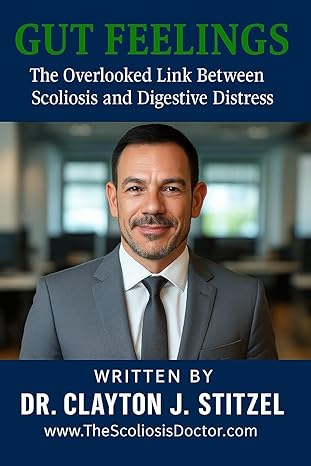
Discover hope, science, and real solutions—explore The Scoliosis Doctor series on Amazon and start transforming your scoliosis journey today! Download the Kindle app on your mobile device for free! Get it for iPhone. Get it for Android.
In this work, Dr. Stitzel highlights how even a moderate case of scoliosis can create enough pressure on the abdomen to alter digestive processes. In severe cases, the effects are even more pronounced, potentially leading to chronic digestive disorders and nutritional deficiencies. The book provides a clear explanation of how the spine and gut are intricately connected, a link that is often missed in conventional medical assessments for digestive complaints.
The book details how scoliosis can trigger a cascade of digestive problems. Addressing the underlying spinal issue can, in turn, lead to significant relief from these gut-related symptoms.
| Factor | How Scoliosis Affects Digestion |
| Mechanical Compression | The curved spine reduces space in the abdominal cavity, squeezing the stomach and intestines. This can cause feelings of fullness, bloating, and constipation. |
| Neurological Interference | Misalignment of the spine can compress or stretch nerves that control the digestive system, leading to poor communication between the brain and gut. This can result in slowed digestion and symptoms like IBS. |
Innovative Scoliosis Treatments: Spotlight on the Scoliosis Activity Suit
When it comes to scoliosis treatment, many people think of traditional hard bracing or, in severe cases, surgery. However, innovative approaches are changing the way we manage scoliosis. These modern methods focus on actively retraining the body to correct posture and reduce the spinal curve, rather than just holding the spine in place.
One of the most exciting developments in this area is the Scoliosis Activity Suit. This is not a passive brace but a dynamic tool that is part of a comprehensive treatment plan. It encourages the body to develop new, healthier muscle memory. Let’s take a closer look at what this suit is, how it works, and the benefits it offers to patients seeking an alternative to traditional methods.
What Is the Scoliosis Activity Suit and How Does It Work?
So, what is a Scoliosis Activity Suit and how does it work for scoliosis treatment? Unlike a rigid brace that immobilizes the torso, the Scoliosis Activity Suit is a flexible, dynamic garment designed to be worn during daily activities and specific exercises. It works by creating gentle, consistent resistance that encourages your body to move into a more corrected, balanced posture. The suit essentially retrains your brain and muscles to hold the spine in a straighter alignment.
A key part of a modern treatment plan, the ScoliSMART Activity Suit is unique. What makes it different from other scoliosis treatments is its active approach. It uses the body’s own movements to create corrective forces. As you walk, sit, or perform therapeutic exercises, the suit provides targeted resistance that activates specific muscles. This process helps to unwind the spinal rotation and reduce the curve, promoting the restoration of the spine’s healthy curves over time.
The goal is not just to support the spine but to actively improve it. By integrating the suit into a comprehensive plan that includes specific exercises and nutritional support, patients can work toward long-term correction. This method empowers you to take an active role in your treatment, using your everyday movements as a tool for healing and strengthening your spine.
Watch this short video to learn how you can get the ScoliSMART Activity Suit Online with free global shipping!

Benefits, Care, and Real Patient Experiences with the Scoliosis Activity Suit
Patients using the ScoliSMART Activity Suit report a range of benefits that go beyond simple curve reduction. Because it actively retrains muscles, many users notice a significant improvement in their overall posture. This can lead to reduced pain, increased mobility, and a more balanced appearance. Can wearing a scoliosis activity suit help improve posture and reduce curvature in scoliosis patients? Real patient experiences suggest it can. The suit is designed to be worn discreetly under clothing, allowing you to continue your daily life while actively treating your scoliosis.
Proper use and care are essential for getting the most out of your Scoliosis Activity Suit at home. It’s typically worn for a few hours each day, especially during physical activities or prescribed exercises. Caring for the suit is straightforward, usually involving gentle hand washing to maintain its elasticity and function. Your provider will give you specific instructions on how to use it as part of your personalized treatment plan. Key benefits often include:
- Active curve correction through neuromuscular re-education
- Improved posture and muscle balance
- Reduction in scoliosis-related pain
- A non-invasive alternative to rigid bracing and surgery
What do real patients say about their experiences using the Scoliosis Activity Suit? Many share stories of newfound confidence and freedom. They appreciate that it’s a proactive treatment that allows them to participate in their own healing. To learn more about this innovative approach and see how it works, you can explore the Scoliosis Activity Suit online.
Conclusion
In conclusion, understanding the link between scoliosis and digestive health is crucial for those affected by this condition. The spine’s structural changes can indeed impact internal organs, leading to various digestive symptoms. Insights from “Gut Feelings: The Overlooked Link Between Scoliosis and Digestive Distress” highlight the often-overlooked connection between spinal alignment and gastrointestinal comfort. Moreover, innovative treatments like the Scoliosis Activity Suit offer promising avenues for management. By exploring these connections and treatments, individuals can take proactive steps towards improving their overall well-being. If you’re interested in learning more about effective management options, consider checking out the Scoliosis Activity Suit here.


