

Key Highlights
- The ScoliSMART Activity Suit is presented by Dr. Clayton J. Stitzel, The Scoliosis Doctor as a movement-based scoliosis treatment that works differently from rigid scoliosis braces.
- Instead of holding your body still, it uses walking and natural movement to build new muscle memory, improve muscle coordination, and support core muscles.
- For people with idiopathic scoliosis, adult scoliosis, and degenerative scoliosis, it may help with posture, ribcage rotation, pain relief, and daily life function.
- Reported outcomes include less pain, improved mobility, and support for spinal curvature stability, which can lead to a better quality of life.
- The suit is designed to be non-restrictive, so optimal wear time can fit more easily into normal daily activities.
- It is also available online, with a fixed price and free worldwide shipping, making it a practical option to explore with your scoliosis doctor.
Welcome to “The Scoliosis Doctor” website! Please watch this less than 2 min video.
Thank you, Dr. Clayton J. Stitzel
Introduction
Getting a scoliosis diagnosis can leave you with a lot of questions. You may wonder what it means for your spinal curvature, your comfort, and your daily life. Common treatment options can include monitoring, exercise, physical therapy, a Scoliosis Brace, or, in severe cases, Scoliosis surgery. The ScoliSMART Activity Suit offers a new way to think about scoliosis treatment because it is designed to work with movement instead of rigid force. Based on information from The Scoliosis Doctor, the suit helps with scoliosis management by retraining spinal muscles during normal activity, building muscle memory, and supporting better posture and function over time. If you have idiopathic scoliosis or adult scoliosis, this approach may feel more practical than options that limit motion. To understand that better, it helps to start with ribcage rotation itself.
Overview of Ribcage Rotation in Scoliosis
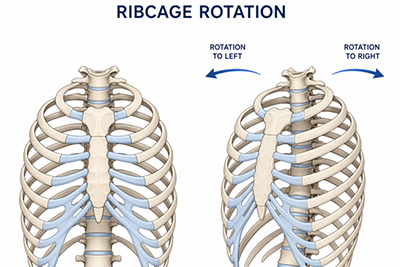
Scoliosis is not only a side-to-side change in the spinal curvature. It can also involve twisting through the torso, which is why ribcage rotation matters. In idiopathic scoliosis, the spine and ribcage can shift together, affecting posture, balance, and the way your body looks and feels in motion. That twist can become more noticeable as the spinal curve changes.
When people think about curve progression, they often focus only on the Cobb angle. Yet ribcage rotation is part of the bigger picture of spinal health and function. The main goal of scoliosis treatment is not just to watch numbers on an X-ray, but to support a better position, reduce discomfort, and improve daily movement. That makes it useful to look at how scoliosis affects ribcage position first, then why that rotation can influence progression and quality of life.
How Scoliosis Impacts Ribcage Position
A spinal curve does more than change alignment on paper. It can alter how your ribcage sits on top of the spine and how your trunk moves during the day. As the curve twists, ribcage rotation may become part of the pattern, which can affect posture and create visible asymmetry. For some people, that is one of the first changes they notice.
This change in position can also affect daily life. You may feel unevenness while standing, walking, or doing ordinary tasks. In adult scoliosis and degenerative scoliosis, it may also connect with scoliosis pain, muscle tension, and movement limits. When the ribcage and spine do not work together well, the body has to compensate. That can place extra demand on spinal muscles and core muscles over a long time.
Can the ScoliSMART Activity Suit help with rib cage rotation in scoliosis? Based on the compiled information, it is designed to work with the body’s natural torque pattern during walking and movement. Instead of forcing the spine into place, it aims to retrain muscle firing patterns, support posture, and help the body move toward a better position. That does not mean it is the right fit for everyone, but the goal is to improve muscle coordination in a natural way that may help address ribcage rotation as part of the broader scoliosis pattern.
Why Ribcage Rotation Matters for Scoliosis Progression

Ribcage rotation matters because scoliosis is a three-dimensional problem. If the ribcage is twisted along with the spine, your posture, balance, and movement can all be affected. That can change how you feel during daily tasks and may shape how your scoliosis treatment plan is built. It is not only about appearance. It is also about function.
As curve progression happens, rotation may become more noticeable and harder to ignore. In severe cases, treatment options may become more complex and can include traditional bracing or Scoliosis surgery. For many people, the aim is to act early with conservative care that supports spinal health before symptoms grow. Better muscle coordination and better posture can matter just as much as watching the curve itself.
Can the Scoliosis Activity Suit help with rib cage rotation in scoliosis? The information provided suggests that it may help by encouraging the body to unwind asymmetrical muscle firing patterns during walking. Since the suit is designed to improve posture, support the pelvis, and build new muscle memory, it may play a role in how the torso holds itself. That is why ribcage rotation deserves attention when you and your scoliosis doctor look at the full picture.
Introduction to the ScoliSMART Activity Suit
The ScoliSMART Activity Suit is presented as a new way to support scoliosis management. It is not described as a standard brace. Instead, The Scoliosis Doctor explains it as a dynamic support system that uses movement to retrain the muscles around the spine. That makes it different from many scoliosis treatment options built around rigid control.
If you are asking what the Scoliosis Activity Suit is and how it helps with scoliosis management, the short answer is simple. It is designed to work with your natural walking pattern, activate spinal muscles, and build new muscle memory over time. For some people, that may be the best way to support posture, pain relief, and curve stability without the limits of a hard brace. The next sections explain what the suit is made to do and which features make it stand out.
What Is the ScoliSMART Activity Suit?
The ScoliSMART Activity Suit is best described as dynamic exercise equipment rather than a passive Scoliosis Brace. It is a soft, wrap-based system meant to be worn during daily life activities such as walking. Rather than trying to hold the body still, it uses movement to create a gentle corrective response in the muscles that support the spine. That difference is central to how it fits into scoliosis treatment.
Its purpose is to improve muscle coordination and train your body toward good posture. The suit is designed so that each step you take creates a response in the spinal muscles. Over time, that repeated response is meant to build muscle memory and support a more stable position. The goal is not simply to control the body from the outside, but to help the body learn a new pattern from the inside.
So what is the Scoliosis Activity Suit and how does it help with scoliosis management? Based on the compiled information, it helps by activating the muscles around the spine during natural movement, encouraging the body to untwist against light resistance, and promoting new muscle memory. Because it is non-restrictive and wearable during normal routines, many people may find it easier to use in daily life than traditional bracing. That practical use is one reason it has gained attention as a different kind of ScoliSMART solution.
Key Features That Support Scoliosis Correction
Several design points make the ScoliSMART Activity Suit stand out among new tools for scoliosis care. The suit is built to work during motion, not in spite of it. That means your normal walking pattern becomes part of the scoliosis treatment process. Instead of a passive hold, the system encourages a corrective muscular response that may support the spinal curve over time.
Another important feature is how it fits into daily activities. The compiled information describes it as non-restrictive, comfortable, and wearable under or over clothing. It also aims to improve core strength, posture, and muscle memory through repeated movement. For many people, that combination matters because they want support they can actually use in real life.
Key features include:
- A movement-based design that uses natural walking patterns to activate spinal muscles.
- Soft wrap components and tension straps that create gentle rotational resistance.
- A focus on muscle memory and core strength instead of rigid immobilization.
- Wearability during daily activities, which may support better consistency and function.
What are the main benefits people experience when wearing the Scoliosis Activity Suit? The reported benefits include less pain, better posture, improved mobility, and support for curve stability. Those outcomes connect directly to the suit’s design.
ScoliSMART Suit vs. Traditional Scoliosis Bracing

When people compare scoliosis braces, the biggest difference often comes down to movement. Traditional bracing usually applies direct pressure to hold the spine in place. The ScoliSMART Activity Suit is presented differently. It is designed to work through movement and muscle retraining rather than external force alone. That changes how people may experience it in everyday care.
This comparison matters because treatment options are not one-size-fits-all. Some people may still need traditional bracing, especially in severe cases. Others may prefer a non-invasive option that supports posture and muscle coordination without restricting normal activity. The ScoliSMART Activity Suit is often discussed as a dynamic alternative, so the next sections break down its design, functionality, comfort, and wearability beside more familiar brace-based care.
Core Differences in Design and Functionality
Traditional bracing and the ScoliSMART Activity Suit are built on different ideas. Traditional bracing usually relies on constant external pressure to hold or push the spine into a corrected position. The ScoliSMART Activity Suit, by contrast, is described as a dynamic, exercise-based device. It uses natural movement and torque patterns during walking to retrain the muscles that support the spine. That means its function depends on motion, not stillness.
This difference can shape how your body responds over time. Traditional bracing focuses on support through immobilization. The ScoliSMART Activity Suit focuses on muscle coordination, posture, and the creation of new muscle memory. If your goal is to improve function while also addressing back pain and asymmetrical muscle firing, that distinction may matter. It is one reason some people see it as a new way to pursue better results.
Here is a clear comparison:
| Feature | ScoliSMART Activity Suit | Traditional Bracing |
| Basic approach | Uses movement and natural torque patterns to retrain muscles | Uses direct pressure to hold or force correction |
| Feel during wear | Described as comfortable and non-restrictive | Often more restrictive |
| Main goal | Improve muscle coordination, posture, and curve stability | Support the spine through external bracing |
| Daily use | Can be worn during normal activity | May limit natural movement more |
| Treatment style | Dynamic support used with outpatient care | Conventional brace-based support |
How does the Scoliosis Activity Suit differ from a traditional scoliosis brace? It differs by teaching the body through motion instead of relying only on rigid control.
Comfort, Mobility, and Wearability Comparison
Comfort often decides whether a treatment becomes part of your routine. The compiled information describes the ScoliSMART Activity Suit as comfortable, non-restrictive, and suitable for wear under or over clothing. That matters because a device that feels too stiff or limiting can be hard to use consistently. In contrast, traditional braces are often linked with restricted motion, which may affect how people feel during the day.
Mobility is another major point. The suit is meant to be worn during normal movement, including walking and regular daily tasks. Because it does not heavily limit motion, it may fit more naturally into work, errands, and activity. The available information also says it may be worn for only a few hours a day, which can make optimal wear time easier to manage. For many people, that creates a good balance between support and freedom.
Is the ScoliSMART Activity Suit comfortable to wear during daily activities? Based on the provided details, that is one of its main selling points. Users are drawn to it because it can support spinal health while allowing natural movement. Reported feedback also points to less pain and better function in daily life. While each person’s experience can vary, the suit is clearly positioned as a more wearable option than many traditional braces.
Mechanisms of Action: How the ScoliSMART Suit Addresses Ribcage Rotation

The ScoliSMART Activity Suit is designed to address scoliosis through neuromuscular training. Every step you take while wearing it creates a gentle rotational force that works against your scoliosis pattern. In response, your spinal muscles automatically react. That repeated response is meant to improve muscle firing patterns, support posture, and help the body move toward a better position. Since ribcage rotation is tied to the twisting pattern of scoliosis, this movement-based approach may help influence how the torso holds itself over time.
What makes this important is the focus on muscle memory. Instead of trying to force correction from the outside, the suit aims to teach the body a new pattern through normal walking and activity. The compiled information explains that this process can help unwind asymmetrical muscle firing, support the pelvis, and build core strength. In that sense, ribcage rotation is not treated as an isolated issue. It is approached as part of the full scoliosis pattern, with neuromuscular training helping the spine and ribcage work in a more balanced way.
Neuromuscular Training with the ScoliSMART Suit
Neuromuscular training means teaching your body to use muscles in a more effective pattern. The ScoliSMART Activity Suit is built around that idea. When you walk or move while wearing it, the suit creates light resistance against your scoliosis pattern. Your body then responds by firing the spinal muscles needed to counter that pull. Over time, this repeated action is designed to improve posture and coordination without depending on rigid control.
That process is often explained as building new muscle memory. Instead of simply holding your torso in one position, the suit aims to help the body learn how to support itself better. The compiled information says it may re-coordinate asymmetrical muscle firing, strengthen core muscles, and create a new posture memory. This is why the suit is often described as dynamic exercise equipment rather than a standard brace. It turns daily movement into therapy.
So what is the Scoliosis Activity Suit and how does it help with scoliosis management? It helps by using neuromuscular training to activate key muscles during normal movement, support core muscles, and promote new muscle memory that may improve alignment over time. In some care plans, it may also be paired with special exercises or physical therapy. That combination can give people a more active role in scoliosis treatment, especially if they want a natural way to support long-term function.
Evidence-Based Benefits of the Scoliosis Activity Suit
When you look at scoliosis treatment options, you want more than claims. You want signs that the approach has been studied. The compiled information includes clinical research and reported outcomes that support the ScoliSMART Activity Suit as a serious option to discuss with your scoliosis doctor. That matters if you are trying to weigh conservative care against traditional bracing or observation alone.
The available data points to benefits such as curve stabilization or improvement, pain relief, better function, and improved comfort during daily use. Those factors can affect quality of life in a real way. While no treatment guarantees the same outcome for every person, the reported numbers help explain why some families and adults see the suit as a path to better results. The next sections look at the research highlights first, then at what clinical outcomes may mean in mild and moderate cases.
Scientific Studies and Research Highlights
Research is often the first thing people ask about when considering a new treatment. Are there any studies showing the effectiveness of the Scoliosis Activity Suit for mild idiopathic scoliosis? Based on the compiled information, yes. A study on adolescent idiopathic scoliosis patients found that 89% of those using the suit stabilized or improved their curves, compared with 44% in an observation-only group. That is an important difference when curve progression is the concern.
Another reported finding focused on long-term stability through skeletal maturity. The compiled material states that patients with mild idiopathic scoliosis who used the suit maintained their curve measurements, while a control group under observation alone progressed by an average of 7 degrees. That suggests the suit may do more than simply offer temporary support. It may help influence the pattern that affects the Cobb angle and progression risk.
Research highlights include:
- 89% of adolescent idiopathic scoliosis patients using the suit stabilized or improved, compared with 44% in observation only.
- The suit group had an 11% progression rate, while 56% of the observation group progressed.
- In one report, mild idiopathic scoliosis patients maintained their curves through maturity, while controls worsened by an average of 7 degrees.
For families trying to protect daily tasks and pursue a better quality of life, those findings are meaningful.
Clinical Outcomes for Mild and Moderate Scoliosis Cases
Clinical outcomes matter most when they connect to real people. For mild idiopathic scoliosis, the compiled information suggests that the ScoliSMART Activity Suit may support early intervention by improving muscle coordination, posture, and support against progression. The available research on adolescent idiopathic scoliosis points to stabilization or improvement in many users, which may be important if watchful waiting feels too passive.
For adults and moderate cases, the discussion shifts from progression alone to function and comfort. Reported adult outcomes include pain relief, better mobility, and curve improvement. The compiled information also says that adult patients achieved a 54% reduction in pain. That can make a major difference in daily life, especially for people dealing with back pain, muscle spasms, and limits during ordinary movement.
Are there any studies showing the effectiveness of the Scoliosis Activity Suit for mild idiopathic scoliosis? The provided information says yes, and those findings are paired with reported adult benefits as well. Across mild and moderate cases, the value of the suit seems tied to its role in building new muscle memory rather than simply holding the body still. Among scoliosis treatment options, that active approach may appeal to people who want pain relief and better function along with curve support.
Who Is a Good Candidate for the ScoliSMART Activity Suit?
Not every person with Scoliosis needs the same type of care. Some only need observation, while others want more active treatment options. Based on the compiled information, a good candidate for the ScoliSMART Activity Suit may include people with adult scoliosis, adolescent idiopathic scoliosis, idiopathic scoliosis, or degenerative scoliosis who want non-invasive support for posture, pain, and curve stability.
The information also notes that scoliosis types linked to neuromuscular conditions can exist alongside muscular dystrophy, cerebral palsy, and spina bifida. Whether the suit fits your needs still depends on your diagnosis, symptoms, and care goals. That is why the next step is looking at age ranges and scoliosis types first, then the factors that influence suit suitability and effectiveness in a more personal treatment plan.
Watch this short video to learn how you can get the ScoliSMART Activity Suit Online with free global shipping!

Age Ranges and Scoliosis Types
Who is a good candidate for using a Scoliosis Activity Suit? The compiled information suggests a broad group may benefit, especially those looking for conservative scoliosis care. The suit has been discussed in relation to adolescent idiopathic scoliosis and adult scoliosis, which means both younger patients and adults may have reason to explore it. Its movement-based design makes it different from devices aimed only at immobilization.
For adults, the suit may appeal to people with adult scoliosis or degenerative scoliosis who want support for posture, pain relief, and function without moving straight to invasive care. The compiled material also says it is described as working for both fused and non-fused patients, which widens the conversation for some adults managing long-term spinal changes.
Examples of potential candidates include:
- Adolescents with adolescent idiopathic scoliosis who need more than observation alone.
- Adults with adult scoliosis or degenerative scoliosis seeking non-surgical support.
- People working with a scoliosis doctor who want scoliosis care that fits normal movement.
The right fit still depends on the individual. A scoliosis doctor can help decide whether this option matches your curve pattern, symptoms, and goals.
Factors Influencing Suit Suitability and Effectiveness
Suitability depends on more than a diagnosis alone. Your symptoms, age, activity level, and goals all matter. Some people want help with pain, some want support against progression, and others want an option that works with daily activities instead of interrupting them. The compiled information positions the suit for people who want conservative support for posture, comfort, and spinal function.
Your treatment plan is another major factor. The best way to evaluate the suit is to look at it in context with other treatment options. Monitoring may still be enough in mild cases. In other situations, physical therapy, exercise, bracing, or surgery may also be part of the discussion. The ScoliSMART Activity Suit is one of the new tools available, but its role should be matched to your needs rather than treated as a universal answer.
Who is a good candidate for using a Scoliosis Activity Suit? Based on the available information, strong candidates may be those who want a non-invasive approach, need help with posture or pain, and are able to use movement as part of care. A scoliosis doctor can review your curve, your lifestyle, and your response to daily activities to decide if this is the best way forward in your treatment plan.
Daily Life with the Scoliosis Activity Suit in the United States

One of the biggest questions about any scoliosis treatment is simple: can you actually live with it? In the United States, many people compare braces, exercises, physical therapy, and other treatment options based on how well they fit into work, school, errands, and movement. The ScoliSMART Activity Suit is presented as a new way to support scoliosis without heavily restricting normal motion. That can make it easier to picture how it may fit into daily life.
The compiled information says the suit can be worn under or over clothing and during regular activity. It also states that only a few hours of wear may be needed, which can make use feel more practical than rigid full-day bracing. For people who want support without feeling locked into a hard device, that matters. If you are exploring this option with a scoliosis doctor in the United States, the next helpful step is understanding how it may work during routine activities and alongside exercise or physical therapy programs.
Wearing the Suit During Routine Activities
Daily use is where any treatment proves itself. The ScoliSMART Activity Suit is described as non-restrictive and wearable during regular movement, which means it may fit into walking, errands, work, and other daily tasks. Instead of being built around stillness, it is designed to use motion as part of therapy. For many people, that feels like a good way to support the spine without stepping away from normal routines.
Comfort also plays a big role in consistency. The compiled information emphasizes that the suit can be worn under or over clothing and does not restrict normal activity in the same way a traditional brace often does. It may also be worn for only a few hours a day, which can make optimal wear time easier to manage. That balance may help people stay more consistent and get more from the device over time.
Routine advantages may include:
- Support during walking and regular daily activities rather than only during rest.
- A more practical wear schedule that may fit work, school, or home routines.
- Reported pain relief and improved function for some users.
Is the ScoliSMART Activity Suit comfortable to wear during daily activities? Based on the provided information, yes, that is one of its main advantages. It is specifically presented as a wearable option for real-life movement.
Adapting Exercise and Physical Therapy Programs
The ScoliSMART Activity Suit is often discussed as part of a broader conservative care approach. That means it may sit alongside physical therapy, monitoring, stretching, and other scoliosis treatment options rather than replacing every other tool. Because the suit is movement-based, it fits naturally with programs that focus on muscle coordination, posture, and function.
This matters when you are adapting special exercises or working with a scoliosis doctor. The suit is designed to activate the muscles that support the spine during natural movement, while exercise and therapy may further target strength, mobility, and alignment. Together, those methods may create a more active path to better posture. The compiled information does not give a fixed protocol, but it does support the idea that the suit can work within outpatient care.
What are the main benefits people experience when wearing the Scoliosis Activity Suit? The reported benefits include better posture, less pain, improved mobility, and support for curve stability through better muscle coordination. If you already use physical therapy or movement-based care, the suit may function as another layer of support in that same direction. That makes it a practical option for people who want treatment to match how the body actually moves.

User Experiences and Success Stories
Clinical numbers matter, but lived experience matters too. The compiled information points to user experiences and patient testimonials that describe the ScoliSMART Activity Suit as helpful for pain relief, mobility, and function. For many readers, those real-world accounts make the treatment feel easier to picture than data alone.
People often want to know whether a device truly fits daily life and whether it leads to a better quality of life. Based on the material provided, many users report improved comfort, less pain, and better movement during routine activities. These stories support the broader message found across The Scoliosis Doctor and even the scoliosis doctor series: conservative care can be more practical when it works with the body. The next sections focus on what patients say directly and how those experiences relate to ribcage rotation and quality of life.
Patient Testimonials About the ScoliSMART Suit
Patient testimonials often answer the question that research cannot fully cover: what does this feel like in real life? Based on the compiled information, many users have shared positive experiences with the ScoliSMART Activity Suit in reviews and testimonials. Common themes include reduced back pain, fewer muscle spasms, better mobility, and improved comfort during normal routines. Those details matter because a treatment must work in daily life, not just in theory.
What do real users say about their experience with the Scoliosis Activity Suit? They often describe it as easier to live in than a rigid brace. The non-restrictive design appears to make movement more natural, which can support consistency in a treatment plan. Some reported outcomes also include curve improvement and better function, suggesting that the benefits may go beyond comfort alone.
Common points in patient testimonials include:
- Lower pain and fewer spasms during daily life.
- A sense of improved movement and comfort during regular activity.
- Support for posture and new muscle memory over time.
These experiences do not replace medical guidance, but they do help explain why people are interested in the suit. When users say they can move more freely and feel better doing daily tasks, that becomes a meaningful part of the bigger scoliosis care picture.
Real-World Improvements in Ribcage Rotation and Quality of Life
Real-world improvement is often measured by what changes in your day. Can you move more easily? Do you feel more balanced? Is scoliosis pain less disruptive? The compiled information highlights pain relief, better mobility, and improved function as common outcomes. Since the suit is designed to retrain muscle firing and support a more balanced posture, these changes may also affect how the ribcage and trunk feel during movement.
While the provided material does not give separate measured outcomes for ribcage rotation alone, it does explain that the suit aims to unwind asymmetrical muscle patterns and support alignment through natural movement. That makes it reasonable to understand ribcage rotation as part of the larger postural pattern being addressed. If the torso holds a better position and moves with less tension, many people may experience a practical benefit even if they do not describe it in technical terms.
What are the main benefits people experience when wearing the Scoliosis Activity Suit? The reported benefits include pain relief, improved posture, more comfort, and support for daily life tasks. For someone living with scoliosis pain, those changes can lead to a better quality of life. That outcome is often what matters most, because better movement and lower discomfort can reshape how the whole day feels.
Spotlight: Scoliosis Boot Camp Book by Dr. Clayton J. Stitzel
If you want a broader look at modern conservative scoliosis care, Scoliosis Boot Camp: A Modern Approach To Treating Scoliosis, by Clayton J. Stitzel, The Scoliosis Doctor, adds helpful context. The book is presented as part of a wider effort to give patients and families practical guidance, hopeful direction, and access to new tools for understanding scoliosis treatment. That makes it a useful companion for people exploring movement-based care, posture support, and ways to build new muscle memory over time.
The Amazon listing positions the book as a modern guide for readers who want clearer insight into treatment options and real solutions. It also fits naturally with the educational mission of The Scoliosis Doctor brand. If you are trying to understand where the ScoliSMART Activity Suit fits into a complete care picture, this scoliosis boot camp resource can be a helpful first step. The next sections look at the modern treatment ideas featured in the book and how they connect to the suit itself.

Discover hope, science, and real solutions—explore The Scoliosis Doctor series on Amazon and start transforming your scoliosis journey today! Download the Kindle app on your mobile device for free! Get it for iPhone. Get it for Android.
Modern Approaches to Treating Scoliosis Featured in the Book
Scoliosis Boot Camp: A Modern Approach To Treating Scoliosis highlights a new way of thinking about care. Rather than treating scoliosis as a condition with only one path, the book supports the idea that people need clear information about treatment options, conservative care, and practical next steps. That message fits well with the broader educational style of The Scoliosis Doctor, which aims to make a complex condition easier to understand.
For many readers, learning is the first step. A scoliosis diagnosis can create fear, especially when you hear about spinal curvature, bracing, or surgery without much context. Books like this can help by explaining the condition in simpler language and by showing that modern care may include more than observation or invasive treatment. The Amazon page presents the book as a guide focused on solutions and progress, which is useful for readers who want direction after diagnosis.
What is the Scoliosis Activity Suit and how does it help with scoliosis management? Within the modern treatment conversation, it is a movement-based device designed to retrain muscles and support posture through natural activity. That makes it a good example of the kind of new way this book points readers toward. It encourages people to explore informed care instead of assuming there is only one answer for spinal curvature.
How the Book Integrates the ScoliSMART Activity Suit
One of the strengths of Scoliosis Boot Camp is that it supports a practical view of scoliosis management. That makes the ScoliSMART Activity Suit a natural fit within the book’s message. The suit reflects the same movement-based mindset by focusing on spinal health, daily life function, and the development of new muscle memory rather than passive support alone.
The book’s value is that it helps readers connect ideas to action. If you are learning about conservative care for the first time, it can be useful to see how education, movement-based treatment, and real-world routines all work together. The ScoliSMART Activity Suit is part of that modern picture because it is built for use during normal activity and is intended to support posture and function over time.
The connection becomes clearer through these themes:
- Education first, so patients understand how movement can support scoliosis care.
- Daily life application, with tools that work during ordinary movement rather than only at rest.
- Focus on spinal health and new muscle memory as long-term goals.
What is the process for getting fitted for a Scoliosis Activity Suit? Based on the compiled information, the suit is designed for home fitting according to your specific curve pattern, without repeated in-person fittings. That practical model matches the book’s focus on accessible, modern care.
Scoliosis Activity Suit Online: Where to Buy and Learn More
If you are ready to explore the scoliosis activity suit online, it helps to know where the official source is. The compiled information states that the world’s first and only Scoliosis Activity Suit is sold exclusively through the official website connected to The Scoliosis Doctor. Buying from the authorized source matters because you want the genuine product, current instructions, and the right guidance for your treatment plan.
The suit is presented as a strong tool for people seeking a non-invasive option that works with movement. The listed price is fixed at $995.00 USD, and the compiled information says free worldwide shipping is included. That simple structure can make the process easier for families comparing treatment options. If you want the best way to move forward, the next two sections explain how ordering works and where you can find added support, education, and product details directly from the official source.
Ordering the Scoliosis Activity Suit Online

Where can you buy or order a Scoliosis Activity Suit online? Based on the compiled information, the official purchase channel is The Scoliosis Doctor website. The suit is sold directly through that source, which helps ensure consistent pricing, authentic product access, and up-to-date guidance. For anyone comparing new tools in scoliosis care, that direct model keeps the process simple.
The fixed cost is listed as $995.00 USD, and free worldwide shipping is included. The compiled information also notes that the suit is FDA registered and HSA/FSA eligible. For many families, that price transparency is a good choice compared with the higher and often less predictable costs linked to traditional braces. It also removes much of the confusion that can come from dealing with multiple providers or hidden fees.
When ordering online, the key points are:
- Use the official website connected to The Scoliosis Doctor.
- Expect a fixed price of $995.00 USD with free global shipping.
- Review product details and how the suit may fit into your treatment plan.
Before you order online, it is still smart to think through your diagnosis, symptoms, and goals. A scoliosis doctor can help you decide whether this option matches your care needs.
Resources for Ongoing Support and Education
Buying a device is only part of the process. Ongoing support and education matter just as much, especially when you are learning how a movement-based treatment fits into long-term scoliosis care. The official site from The Scoliosis Doctor is the central place for product details, purchase access, and educational material tied to the ScoliSMART approach. If you want to explore the official source, visit the Scoliosis Activity Suit online page.
That page is useful because it gathers practical information in one place. The compiled content notes that the suit is available worldwide, includes free shipping, and is designed to support posture, pain relief, and curve stability through movement-based muscle retraining. For readers who want support and education before making a decision, that direct resource can be more helpful than piecing together scattered information.
Helpful resources include:
- Official product information and ordering details from The Scoliosis Doctor.
- Education about movement-based scoliosis care and related new tools.
- Broader learning through the scoliosis doctor series and related articles.
Where can you buy or order a Scoliosis Activity Suit online? The clearest answer is through the official website. That is also where support and education continue after you start learning about the product.
Conclusion
In conclusion, understanding ribcage rotation and its impact on scoliosis is crucial for effective treatment. The ScoliSMART Activity Suit offers a modern alternative to traditional bracing, emphasizing comfort and mobility while addressing the unique challenges posed by ribcage rotation. With evidence-based benefits and positive user experiences, it becomes a valuable tool in managing scoliosis. For those looking to explore more about how to integrate innovative treatments into their care, check out “Scoliosis Boot Camp: A Modern Approach To Treating Scoliosis, by Clayton J. Stitzel, The Scoliosis Doctor,” which delves into contemporary methods for tackling this condition. To learn more about the ScoliSMART Activity Suit and how to order it online, visit The Scoliosis Doctor’s site. Your journey towards better spinal health can start today!
Frequently Asked Questions
Can the ScoliSMART Suit be used for all forms of scoliosis?
The ScoliSMART Suit is not automatically the right fit for all scoliosis types. The compiled information discusses it in relation to idiopathic scoliosis, adolescent idiopathic scoliosis, adult scoliosis, and degenerative scoliosis, and it also mentions neuromuscular conditions such as cerebral palsy and muscular dystrophy. Still, treatment options should be matched to your diagnosis, symptoms, and goals. A scoliosis doctor can help decide whether this movement-based option belongs in your care plan or whether another approach makes more sense.
Is the ScoliSMART Activity Suit comfortable for day-to-day use?
Based on the compiled information, comfort is one of the main advantages of the ScoliSMART Activity Suit. It is described as non-restrictive, wearable under or over clothing, and suitable for daily activities such as walking and routine tasks. It may also be worn for only a few hours a day, which can make optimal wear time easier to manage. Because it works through movement and activation of core muscles, the goal is to support better posture without the heavy limits often linked to rigid bracing.
How quickly can results be seen with Scoliosis Activity Suit therapy?
The compiled information does not give a fixed timeline for when results appear. The ScoliSMART Activity Suit is designed to build new muscle memory over time through repeated movement, so progress depends on your body, your treatment plan, and how consistently the suit is used. Some reported outcomes include pain relief, better function, and support for spinal curvature stability. Since scoliosis and curve progression vary by person, the best measure of success is often better quality of life along with improved posture and comfort.


